
The Greater Portland Towns Where We Build New Homes
We build new custom homes in Portland and 21 towns around it, from shingle-style houses above Casco Bay to farmhouses beside hayfields and lake houses near Sebago. Pick your town to see what its lots, its code office and its water and septic rules mean for a new house there.
- Part of Legacy Construction, founded 2021
- 4 to 6 builds at a time, never more
- 5-year workmanship warranty, in writing
Which Shore Towns Near Portland Do We Build In?
We build in seven shore towns near Portland, from South Portland and Cape Elizabeth beside the city, up Casco Bay to Falmouth and Yarmouth, and down to Old Orchard Beach and Saco on Saco Bay.
- South Portland1 mi
South Portland takes its drinking water from the Portland Water District and runs city sewer to every part of town, so a lot here rarely needs a well or a septic design. Much of its shoreline has bedrock exposed or just under the soil, and new FEMA flood maps took effect there on June 20, 2024.
- Cape Elizabeth4 mi
Nearly every home in Cape Elizabeth draws Portland Water District water, yet rural land outside the sewer service area still needs a septic system, and the Residence A district asks for 80,000 square feet per house. Where a shore lot falls in a VE flood zone, the town requires a new home to stand on engineered posts or columns.
- Falmouth5 mi
Falmouth adopted a rate of growth ordinance in 2000, and in 2020 its yearly supply of new home permits ran out on October 28. A new house on a lot that abuts public sewer must connect to it, and a lot with no sewer at its edge uses a private septic system.
- Scarborough6 mi
Scarborough Marsh covers about 3,200 acres, the most of any salt marsh in Maine, and the town forbids basements inside its mapped flood hazard areas. West of the Turnpike, most homes still draw from private wells fed by the aquifer.
- Yarmouth11 mi
The Yarmouth Water District supplies public water from four gravel-packed wells, all four of which sit in North Yarmouth. In the Royal River sewershed, a sewer moratorium bars new dwellings through February 27, 2027, though a recorded agreement can allow a provisional septic system.
- Old Orchard Beach11 mi
Along the Old Orchard Beach beachfront, FEMA's VE zones put the base flood elevation at roughly 11 to 16 feet, and the town's 2024 floodplain ordinance sets new houses there on posts or columns. Shoreland rules cover the first 250 feet back from the ocean, and the same distance along Goosefare Brook downstream of the railroad bridge.
- Saco14 mi
Most of Saco between the coast and the Maine Turnpike can reach public sewer, while North Saco and West Saco mostly rely on private wells. Building within 500 feet of the Saco River also takes a permit from the Saco River Corridor Commission.
Where Do We Build New Homes North of Portland?
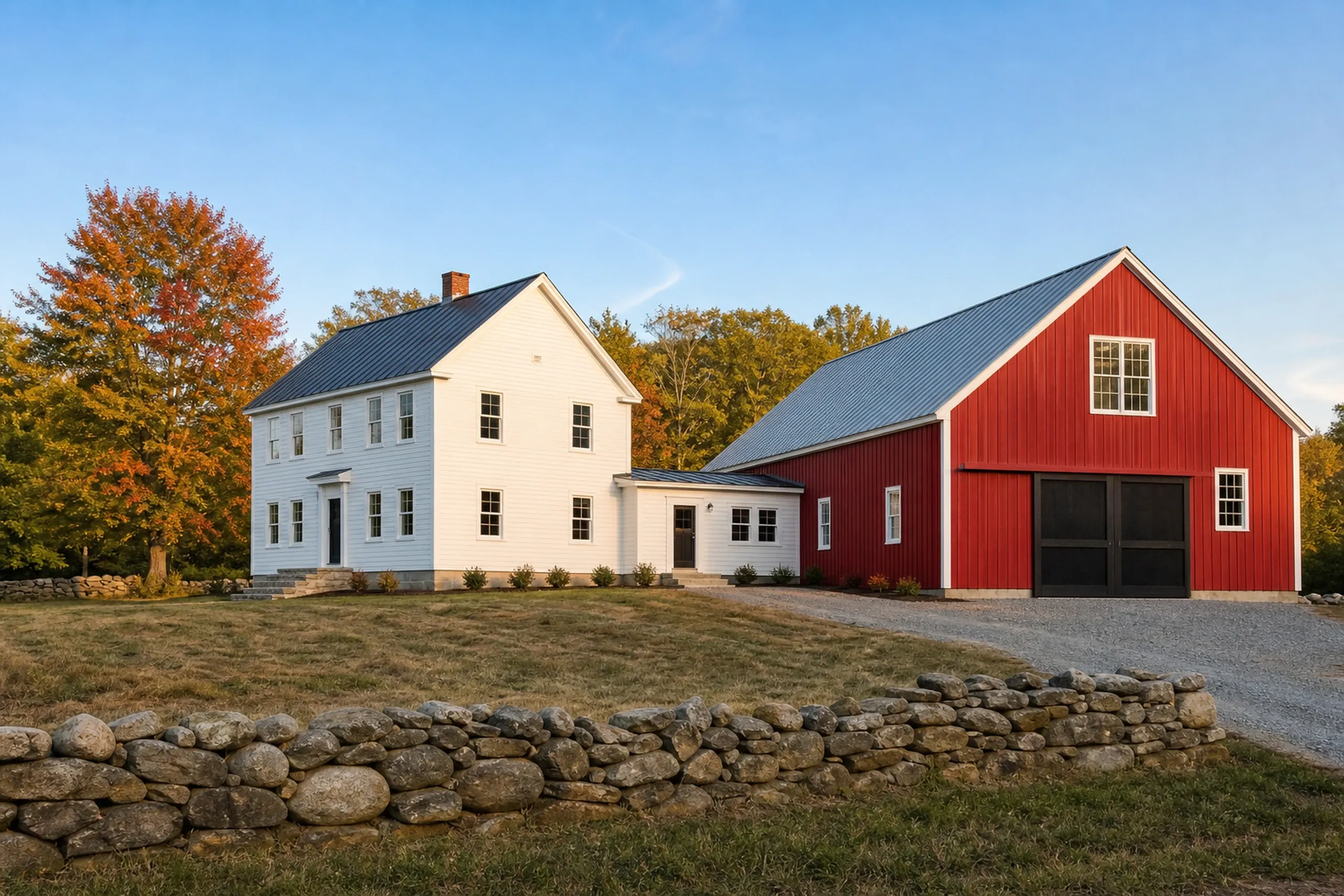
North of Portland we build new homes in seven towns along Route 1 and the farm roads inland, from Cumberland and North Yarmouth out to Freeport, Gray, Pownal, New Gloucester and Raymond.
- Cumberland10 mi
Cumberland issues a limited number of growth permits for new homes each year, and each application must show either a sewer user unit or an HHE-200 septic design drawn within the last two years. A house in its rural RR1 district takes 4 acres, which drops to 2 with a sewer connection.
- North Yarmouth12 mi
North Yarmouth's Farm and Forest District asks for 3 acres per house and requires open space subdivisions that keep at least half of a parcel undeveloped. Its Royal River Corridor Overlay reaches 500 feet back on both sides of Chandler Brook, the East Branch and the Royal River.
- Freeport16 mi
Freeport has no rate of growth ordinance, but outside subdivisions its Rural Residential districts ask for 2.5-acre lots with 200 feet of road frontage. Maine Water Company reaches only part of the town, and the Rural Residential I district lies generally beyond public water and sewer.
- Gray16 mi
Gray caps growth permits at 53 a fiscal year under an ordinance that took effect July 1, 2026, with no more than 20 of them in the Lake District. The town's building inspector must be shown suitable septic soils before a building permit is issued, and any soil survey is paid for by the applicant.
- Pownal17 mi
Pownal wants 90,000 square feet per house in its Village and Rural districts, with 300 feet of street frontage, because soil fit for septic systems is scarce there. Most homes draw water from sand and gravel aquifers or bedrock fractures, and Bradbury Mountain State Park lies within the town.
- New Gloucester21 mi
Much of New Gloucester sits over sand and gravel aquifers or bedrock ones, and inside its Groundwater Protection Overlay no building permit issues until the code officer finds a house meets the groundwater standards. The town's shoreland district also reaches 500 feet back along the western side of Sabbathday Lake.
- Raymond20 mi
Raymond holds new buildings 100 feet back from its lakes and ponds, among them Panther Pond, Thomas Pond and Crescent Lake, and caps hard surfaces at 15 percent of a lot's shoreland portion. A septic system there must sit 100 feet from the high-water mark and from any well.
Which Towns West Toward Sebago Lake Do We Serve?
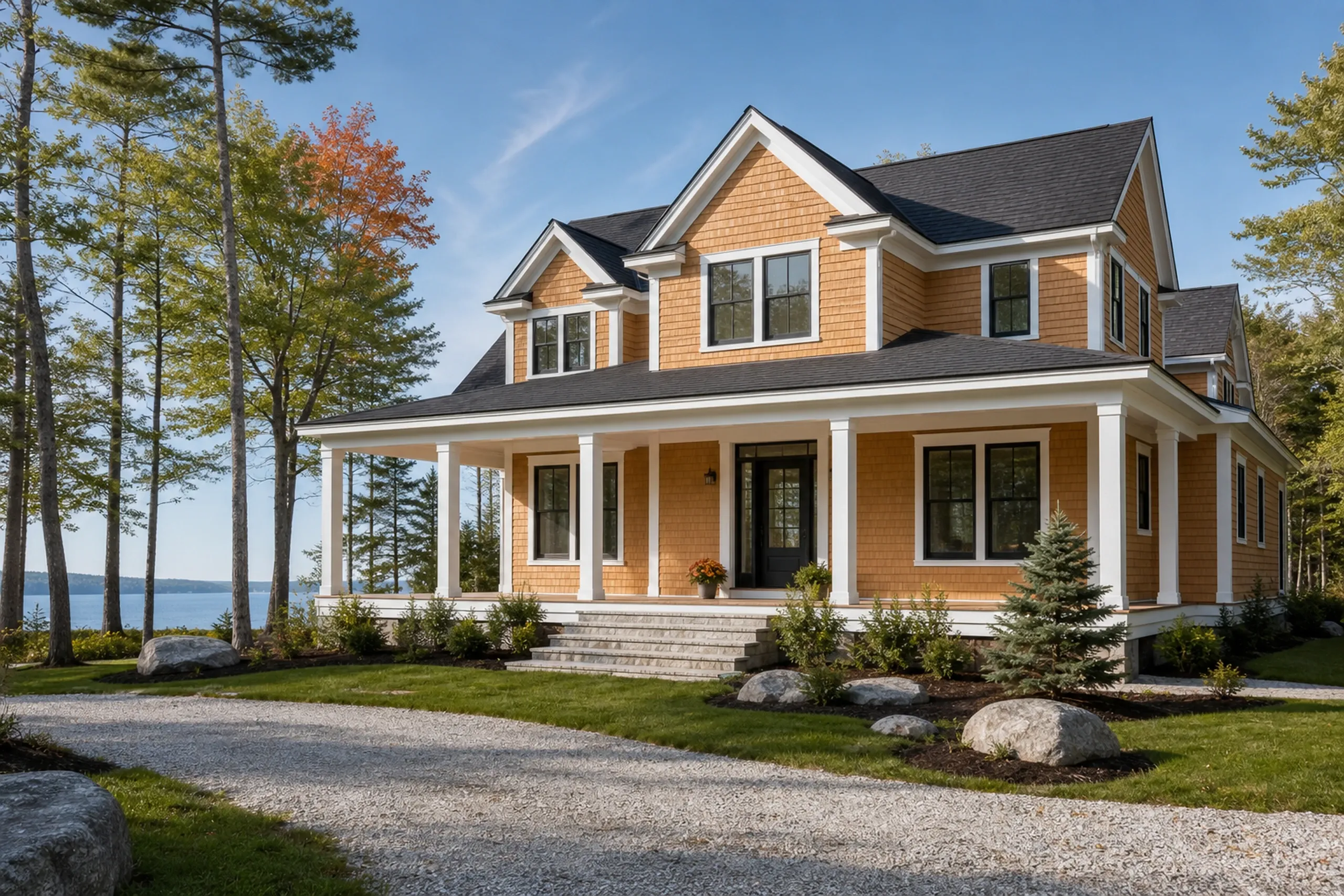
West of Portland we serve seven towns along the Presumpscot and the Saco rivers and up toward Sebago Lake, from Westbrook and Gorham out to Windham, Buxton, Standish, Hollis and Dayton.
- Westbrook6 mi
The Portland Water District can serve all of Westbrook with public water from Sebago Lake, and most homes in the city are on public sewer. Under it runs the Presumpscot Formation, a marine silty clay named for this river valley that can be as much as 110 feet thick.
- Gorham9 mi
Gorham caps growth permits at 125 a calendar year, no more than 25 of them in its Rural District. Every new house in town, single-family included, must carry an automatic sprinkler system.
- Windham12 mi
Windham touches Sebago Lake, Highland Lake and Little Sebago, and a 2002 USGS report counted it among the largest towns in Maine without sewers. Portland Water District's North Windham wastewater project, begun in June 2023, is expected to take more than 100 septic systems out of service.
- Buxton14 mi
Buxton's 2003 comprehensive plan found no municipal water or central sewer anywhere in town, so homes there rely on private wells and septic systems. Minimum lots climb from 80,000 square feet in the village to 200,000 in the rural district.
- Standish16 mi
Standish caps new growth permits each year and has no public sewer, so each new house there carries its own septic design. At the southern tip of Sebago Lake, much of the land reserve is managed by the Portland Water District to protect drinking water.
- Hollis17 mi
The North Hollis Resource Conservation Zone, which surrounds Deer Pond and Killick Pond, asks for 5 acres and 400 feet of frontage per lot, while the town's two-acre rural zone asks for 200 feet. The Saco River forms the town's whole northeastern edge, where building within 500 feet also goes through the Saco River Corridor Commission.
- Dayton18 mi
Dayton runs no public water or sewer system, and its 2017 plan found few areas where the soils suit a septic system. With 2,129 residents, Dayton does not have to enforce the state building and energy code, and its rural districts ask for 3-acre lots with 275 feet of frontage.
Is Your Land in One of These Towns?
Tell us the town and where you stand with the lot, whether it is owned, under contract or still a listing you are weighing. We will arrange to walk it with you before any price is written.