
Full-Service Build on Your Lot | New Home Builder Portland
To build on your lot without the land swallowing the budget, price what the ground hides first: ledge, wet soil, the septic design, the well and the length of the drive. We walk the land with you before anything is designed, and those lot costs go on paper before the house itself is priced.
- (207) 613-8565
- 130 Main St, 1st Floor, Ste 2, Gorham
- [email protected]
- Part of Legacy Construction, founded 2021
- 4 to 6 builds at a time, never more
- 5-year workmanship warranty, in writing
- Land walked before you buy it
- Well, septic and site work priced first
- Test pits read before any design
This page is about building a new custom house on land you own, or plan to buy, around Greater Portland, and about what that land costs to prepare before the house can start.
It covers the lot walk, test pits and septic design, wells, public water and sewer where they reach, ledge, clearing and foundations. New Home Builder Portland prices those site costs on lines of their own, ahead of the house, so a cheap lot cannot hide an expensive one.
The figure to keep: across many builds, a cleared, utility-ready lot adds about $77,000 to $105,000 and a wooded one with ledge can pass $165,000, with the house averaging $315 to $365, $365 to $435 or $435 to $490+ per square foot by finish tier.
Why Can a Cheap Lot Turn Into an Expensive House?
A cheap lot turns into an expensive house when what lies under it, or between it and the road, has to be dug out, drained or brought in at your cost. Ledge and septic design are the two largest site variables across Cumberland and York counties, and a listing price shows neither one.
- Ledge, wet ground and slope found on the first walk
- Septic design read from test pits before drawings start
- Driveway and power costs set beside the house price
What other services start with the land?
Every service
Custom Home Design
Four to six weeks of drawings, specifications and selections that end in one fixed price. Design itself is priced at the first meeting, from your scope.See Custom Home Design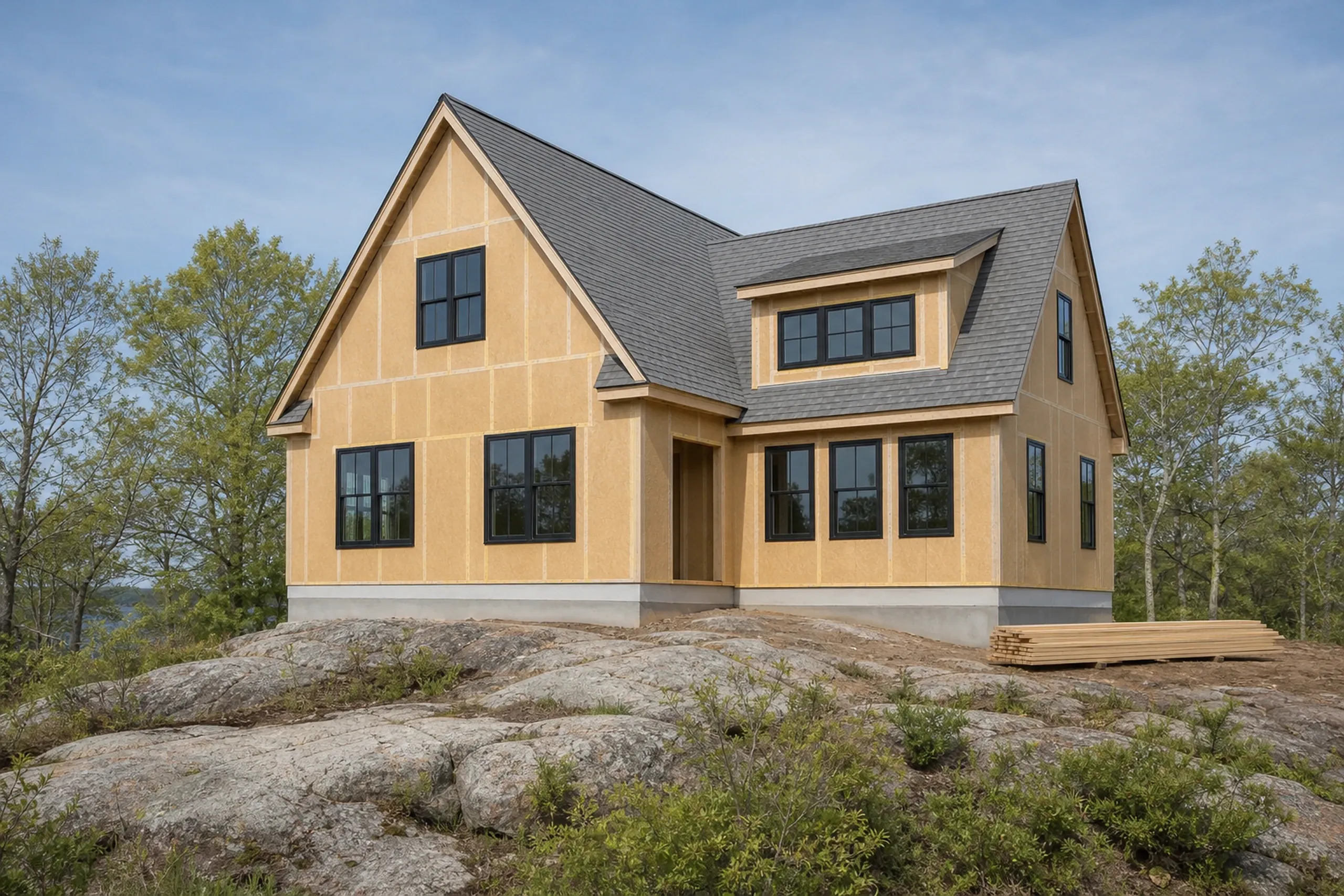
Coastal Home Builder
Houses inside a shoreland or flood zone, built to the setbacks and foundation that site demands. Mid-range custom work averages $365 to $435 per square foot.See Coastal Home Builder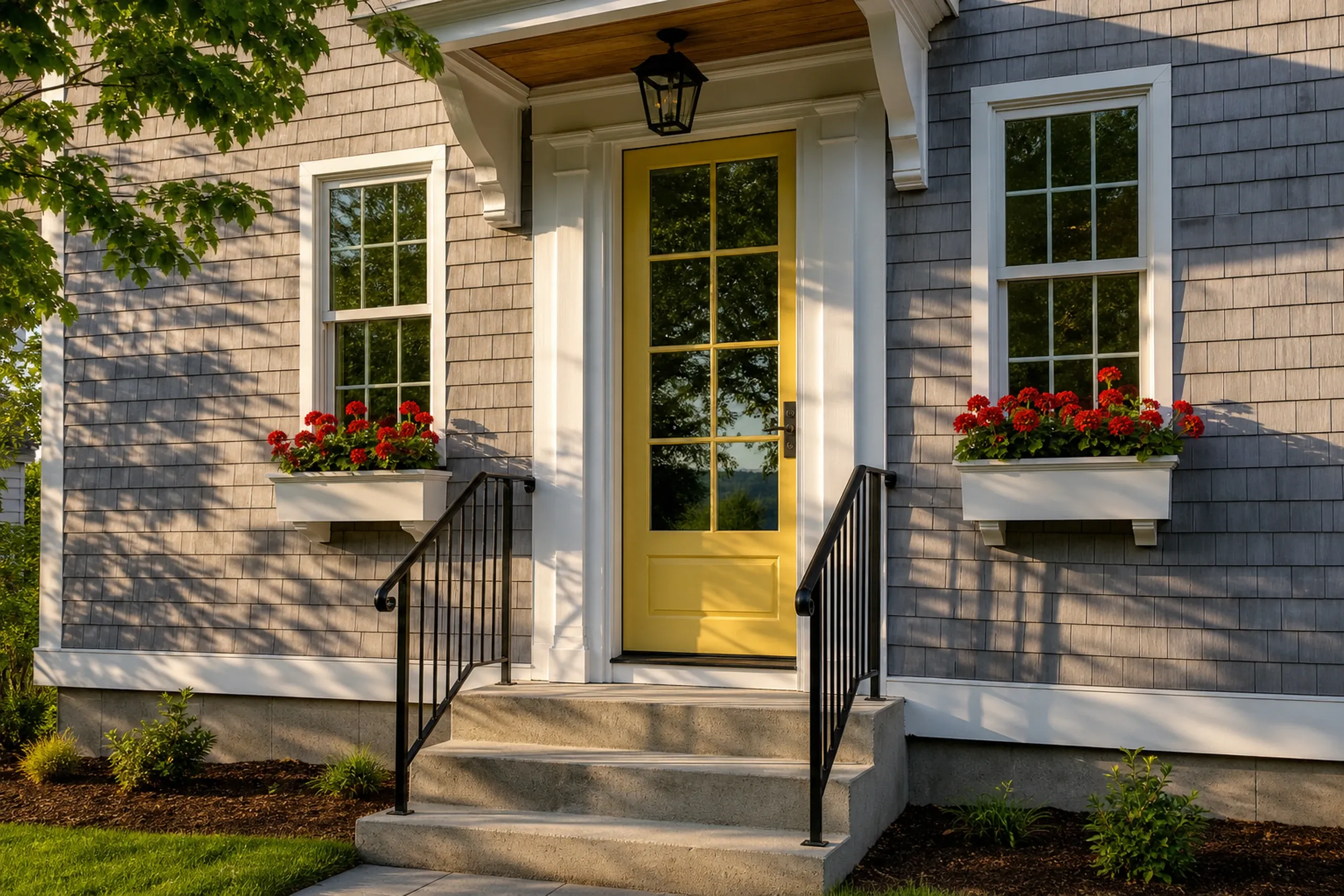
Knockdown Rebuild
An old house taken down and a new one built on its lot, with the permit question answered first. Rebuilds finished to high detail average $435 to $490+ per square foot.See Knockdown Rebuild
Where do we build on land our clients own?
Within 5 miles
10 to 15 miles
What Does Building on Your Own Land Involve?
Building on your own land involves three jobs before the house: judging the lot, settling water and wastewater, and readying the ground for a foundation.
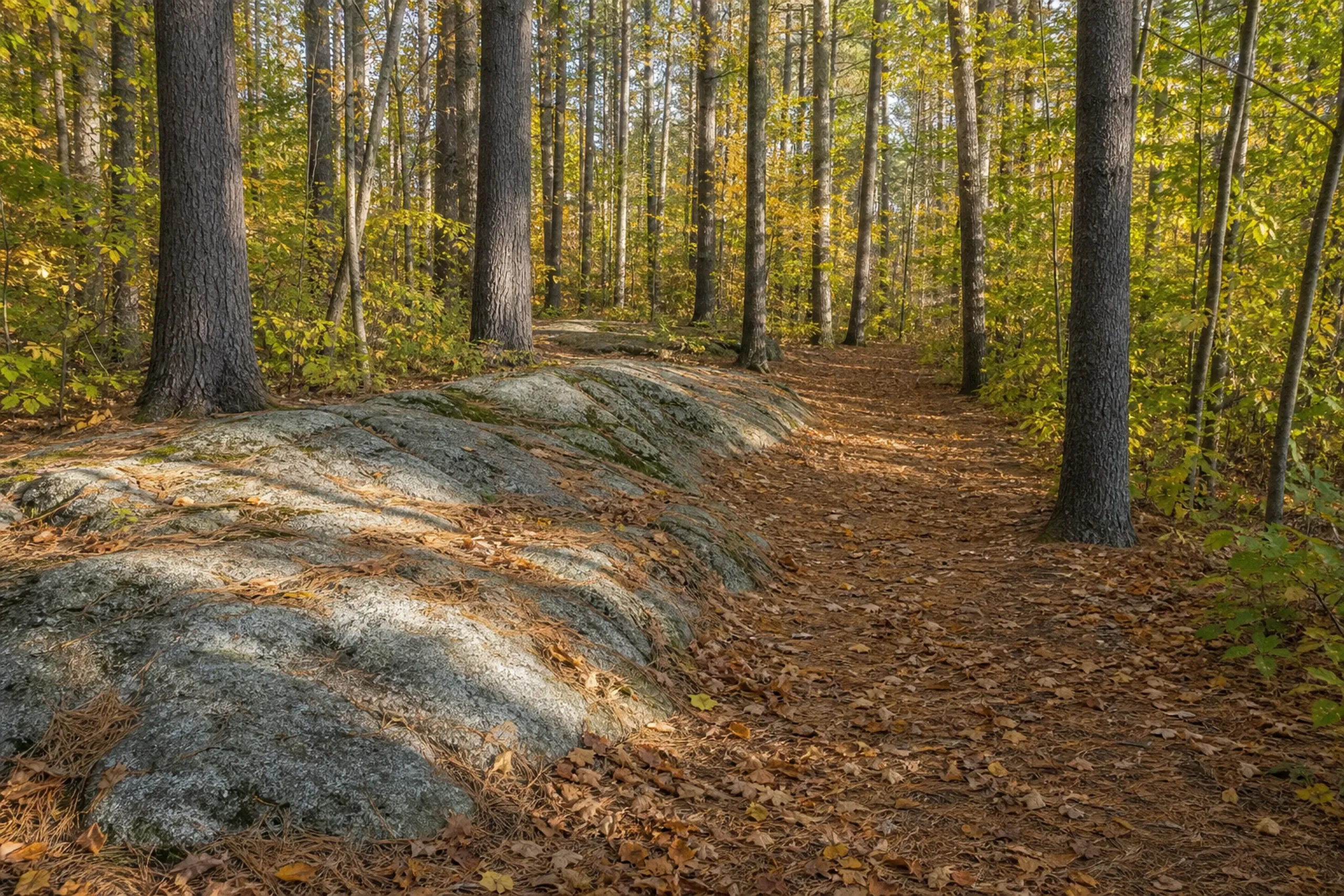
Walking and Judging Land Before You Buy
Our owner's Maine real estate license lets us help clients find land and size it up before they commit. On a walk we look for ledge (bedrock near the surface) breaking through, standing water or wetland plants, slope that will need fill or a walkout, and how far the house would sit from the road.
Power is the line people forget, since a lot with service at the road connects for far less than one needing a long run of new poles or buried cable. Each finding becomes a dollar line before you sign a purchase agreement, so the land's asking price is never mistaken for the cost to build there.
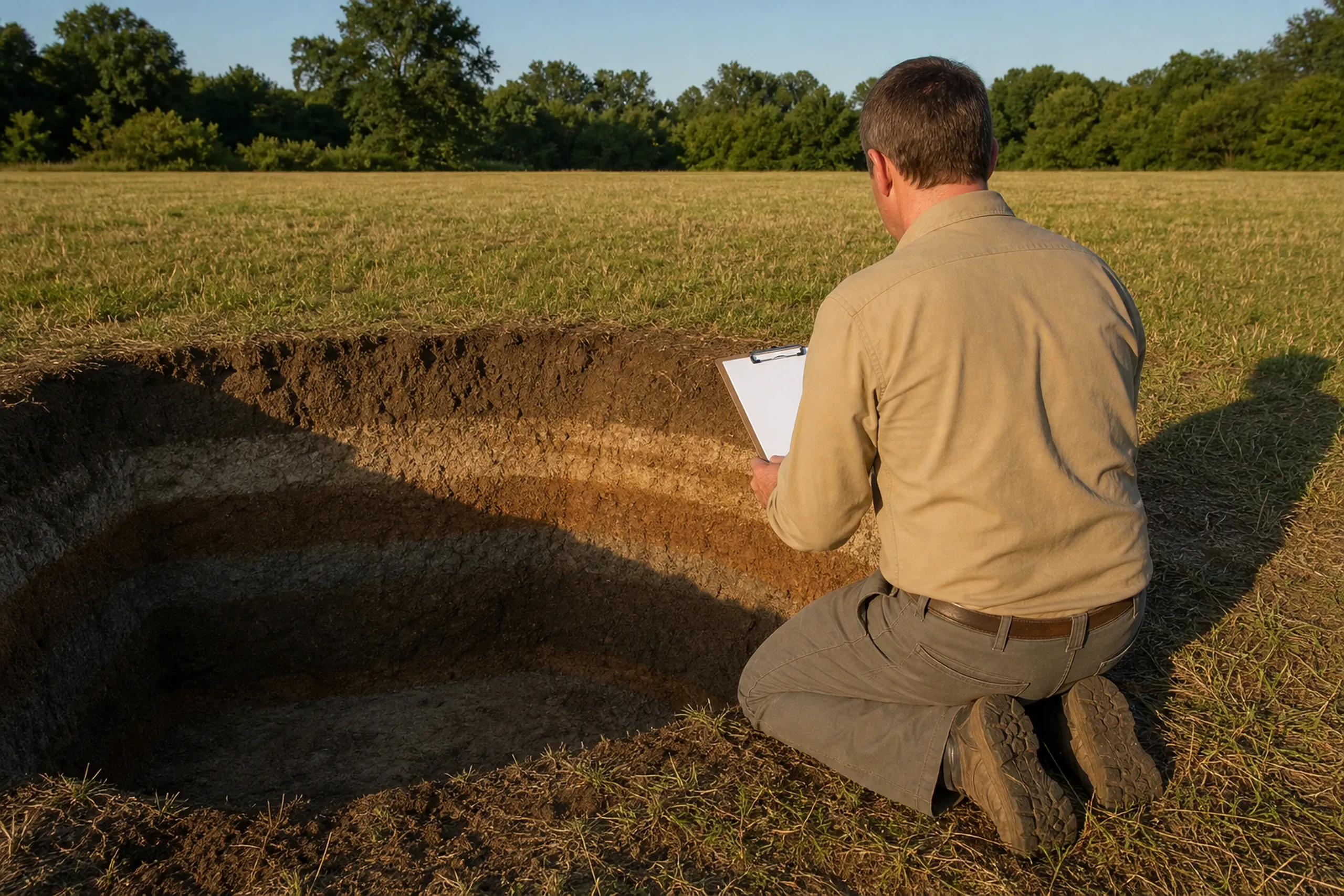
Septic and Well: What the Ground Allows
Most lots beyond the sewer lines need a septic system, and in Maine only a site evaluator may design one, filing the soil log and system plan on Maine's HHE-200 form. The evaluator's design fixes the system's size and cost, and it can cap how many bedrooms the house may have.
A drilled well is the other unknown, because its depth, and so its cost, stays a guess until the driller reaches steady water. Where a Portland Water District main and a sewer line already run along the street, the house ties into them instead, and the town's connection or impact fees replace the well and septic lines.
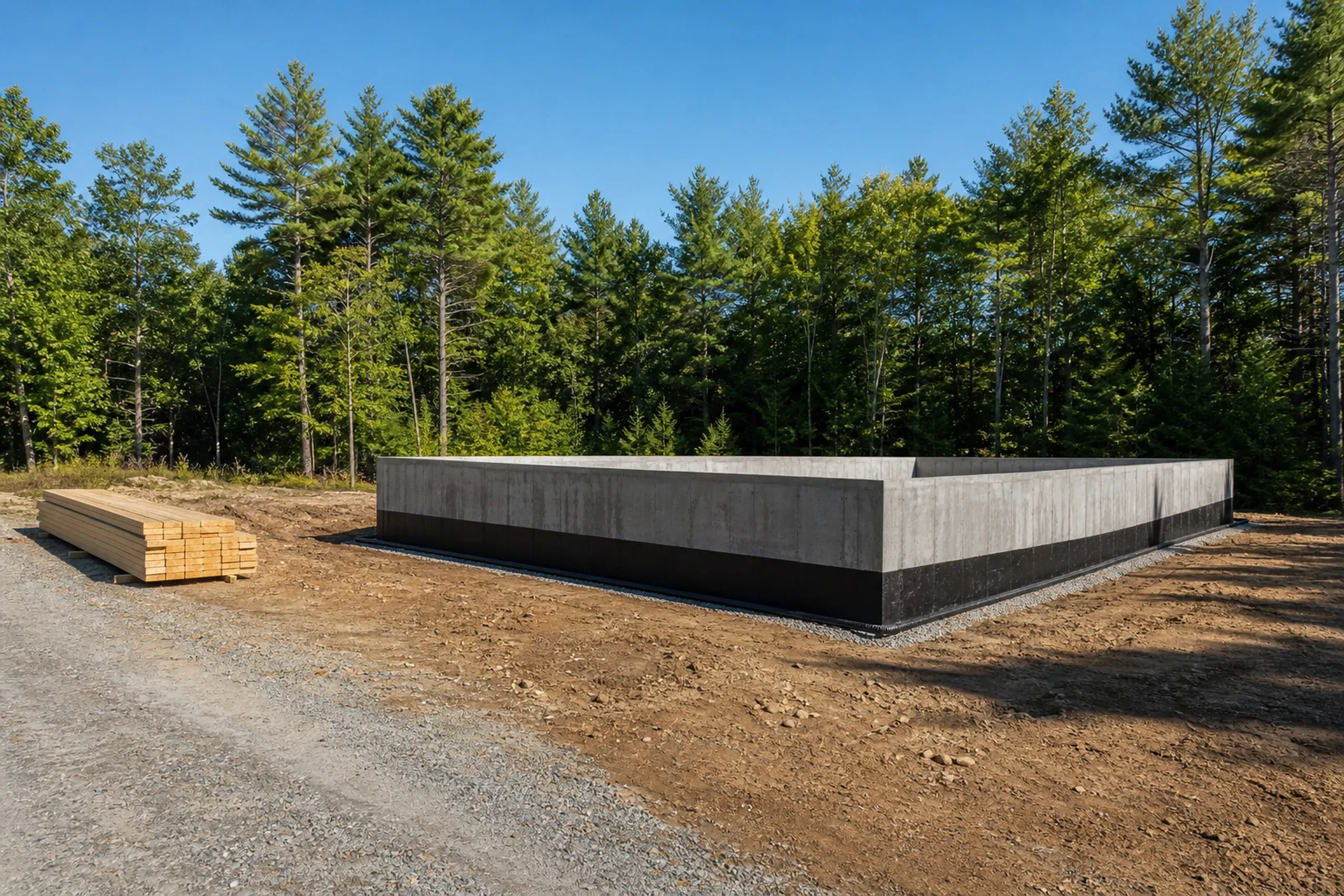
Clearing, Ledge and the Foundation
Site work is the clearing, stump removal, driveway, grading and drainage that turn raw land into a pad ready for concrete. Shallow ledge may have to be broken up and hauled off, or the plan may trade a full basement for a frost wall (a short foundation wall whose footings sit under the frost line, roughly four feet deep on the southern coast) with a slab.
A full basement wants depth and dry soil, and the Maine Geological Survey maps give a first read on what lies under a parcel before anyone digs. Code calls for drains around a basement foundation and ground sloped so rain runs off, away from the walls, because a wet basement starts at the site work, never at the concrete.
What Build on Your Lot Services Do We Offer?
Our lot work runs from the first walk to a pad ready for the foundation crew.
- Lot walks before you buy or design
- Test pits, septic design and the well, coordinated
- Clearing, ledge work, the driveway and power
We line up the site evaluator, the septic design and the well driller in the order your lot needs them, and we pull the building permit once the plans are done. Inside 250 feet of tidal water, a river, a great pond or certain wetlands (75 feet from some streams), the town's shoreland rules under Maine DEP's shoreland zoning program set how close the house can sit, and the Code Enforcement Officer (CEO) makes every approval call.
How Do We Take Your Land From Raw Lot to Ready?
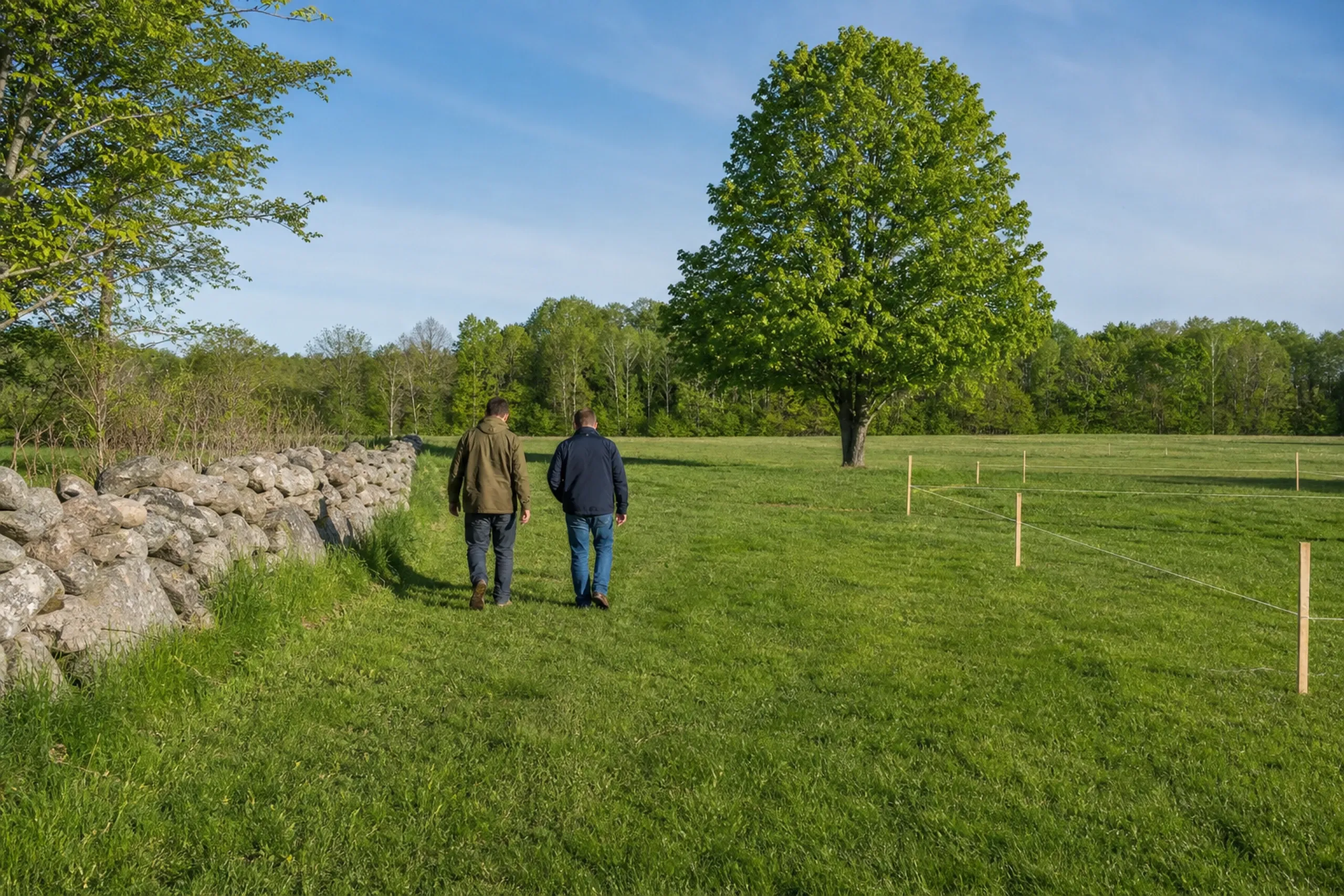
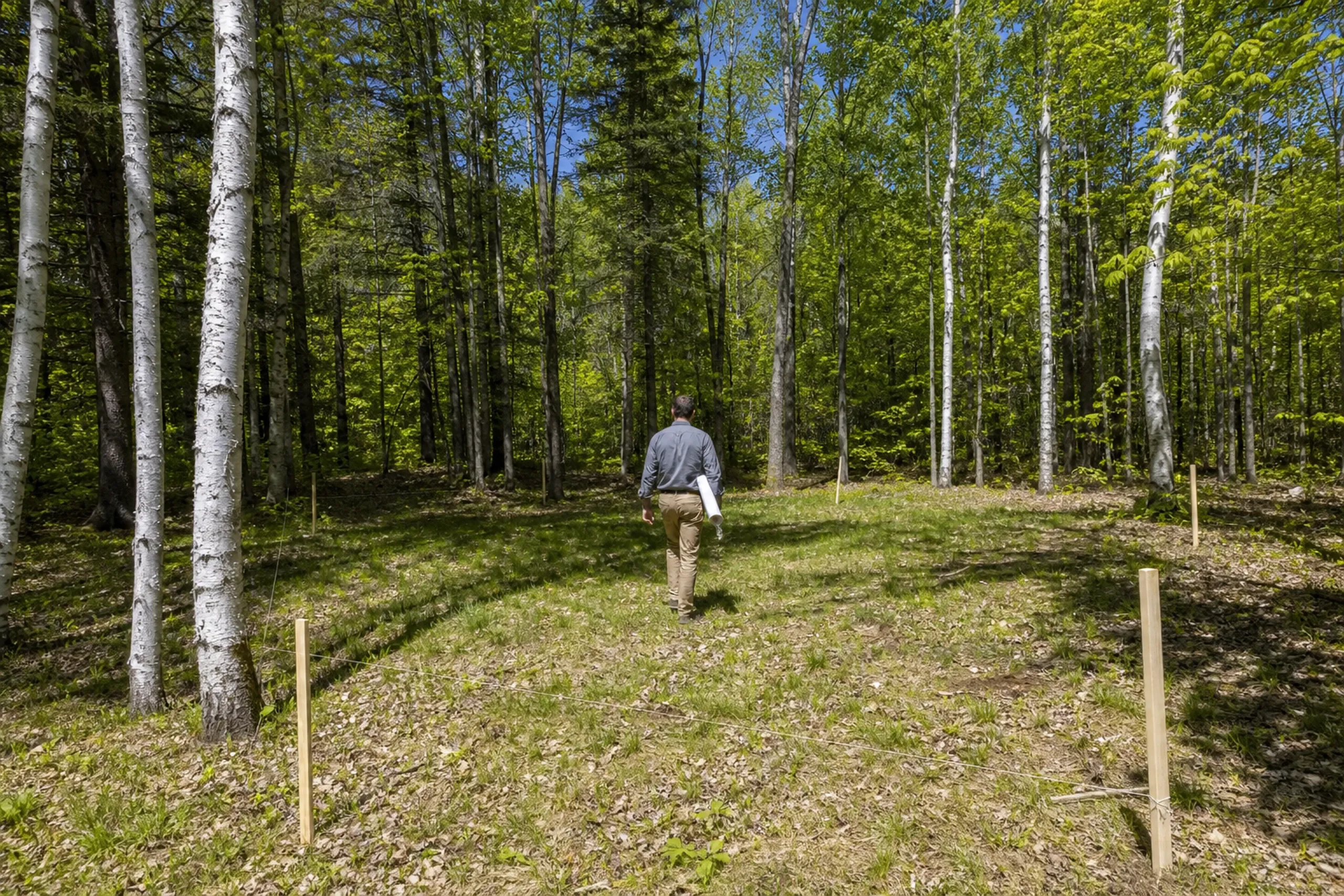
We walk the land and mark what costs money.
Slope, ledge, wet ground, the drive and the power run all get noted on the first visit, and you leave with a list of what the lot will need.
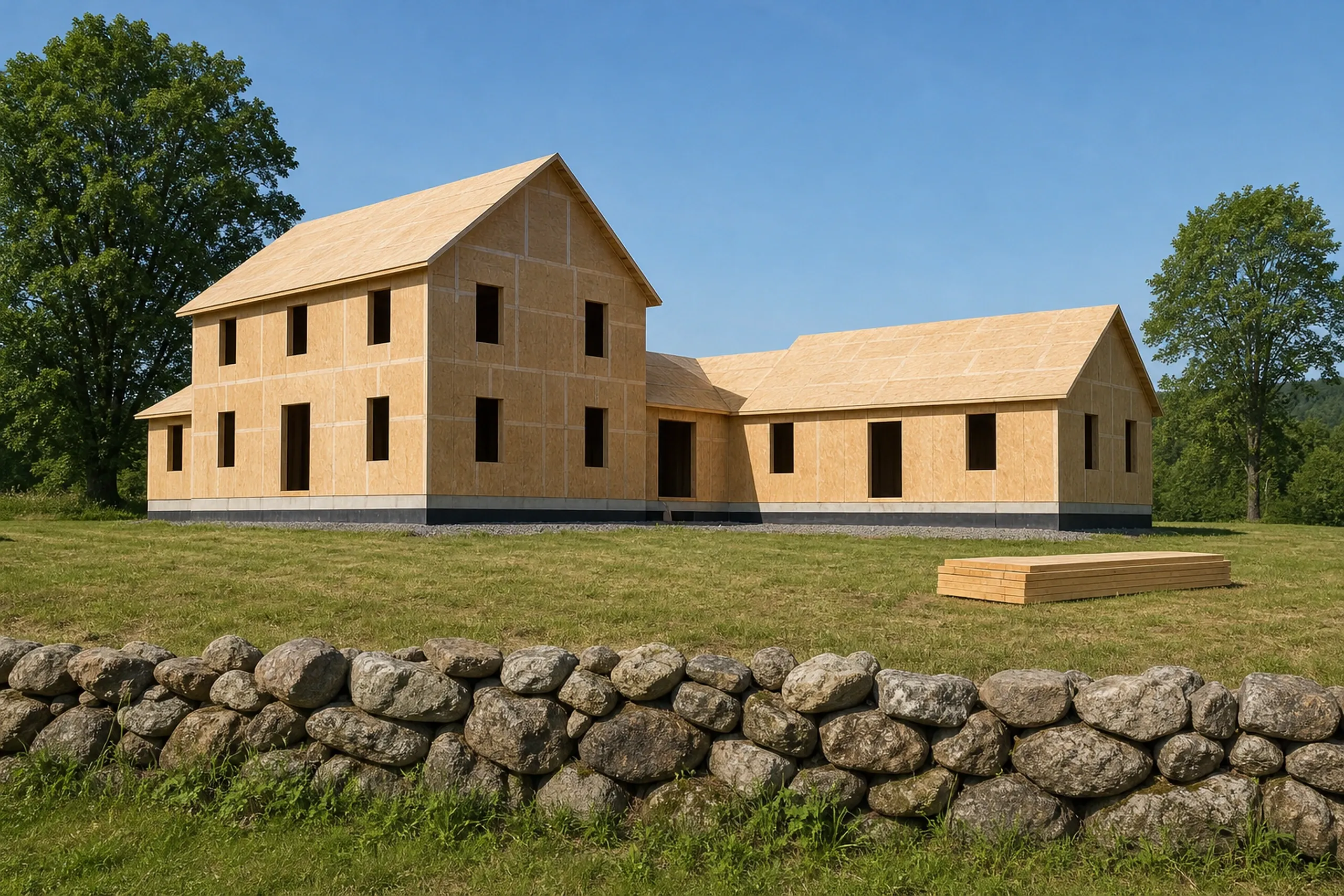
Test pits, then lot costs, then the contract.
The test pits come back before the design is final, so the septic, the well and the site work are priced beside the house. The signed agreement that follows meets 10 MRSA §1487, which puts any job above $3,000 on paper and allows no more than one third down at signing.
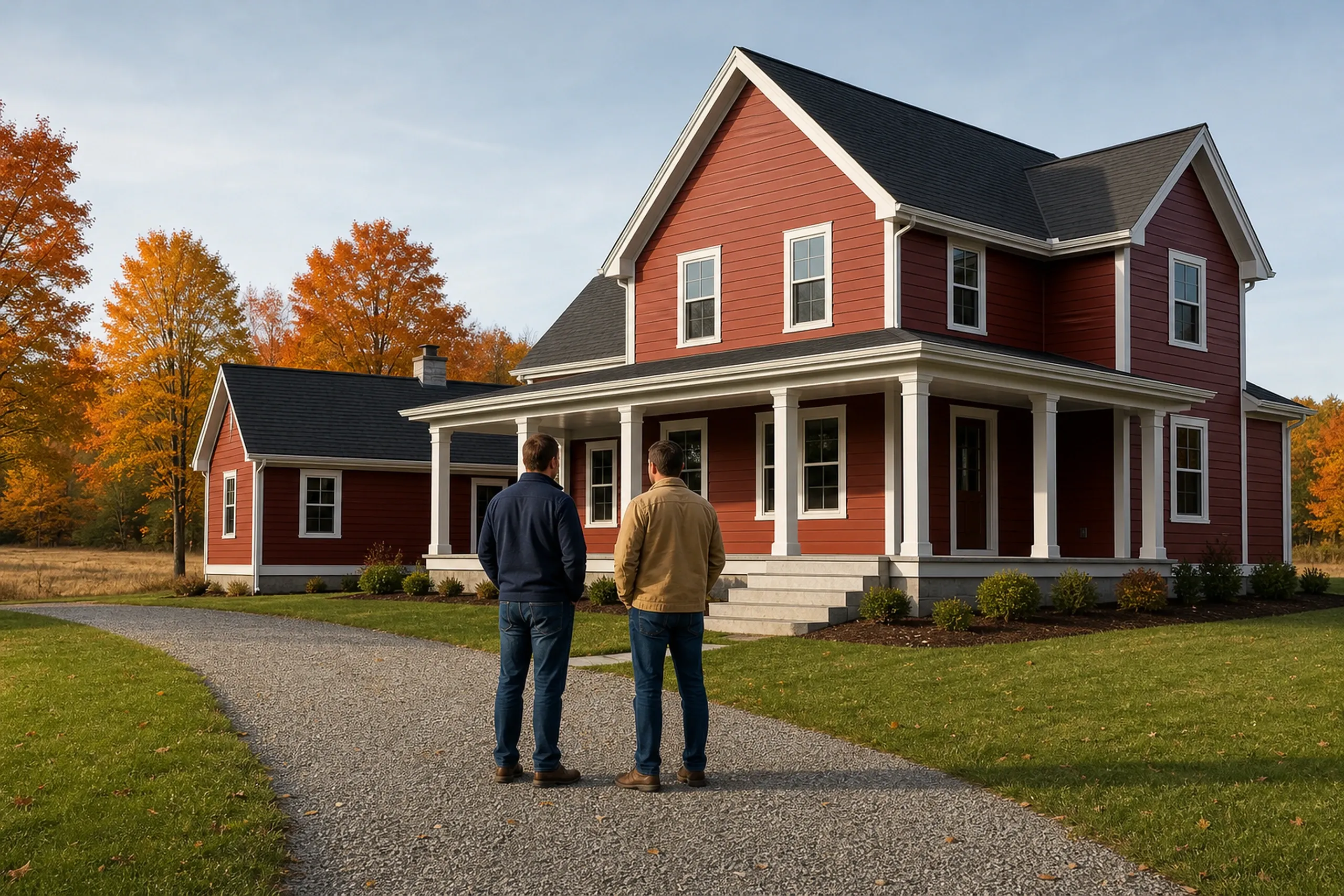
Site work first, then the house.
Clearing, ledge work and the drive come before the foundation, our owner checks each phase before another crew is called, and a weekly update follows the job all the way to the final walkthrough.
When Does It Make Sense to Build on Your Lot?
It makes sense to build on your lot when the land is yours or nearly so, the test pits pass, and the site costs still leave room for the house you want. Get a builder on the land before you buy it, not after the closing.
Joe Hausler pairs his construction management degree with a Maine real estate license, so one person can read both the listing and what the ground under it will cost to build on. That pairing matters most on a lot that looks like a bargain.
It makes less sense when the septic design would hold the house below the bedrooms you need, when ledge or a long drive would carry site work past $165,000 under a modest plan, or when a finished house nearby already fits. In those cases we say so plainly, and a different lot is often the cheaper fix.
Who Judges a Lot, Where Costs Rise, and When to Test?
Who should walk a lot before you buy it?
The people who should walk a lot before you buy it are you and a builder who prices site work, with a site evaluator to follow once test pits are worth digging. A seller's listing describes the land, and it never prices the work to build on it.
Where do lot costs run highest around Greater Portland?
Lot costs run highest around Greater Portland on wooded parcels with shallow ledge, at the end of long drives, and near water, where shoreland setbacks narrow where the house can go. Across both counties we work in, ledge and the septic design move a site budget more than anything else.
When should test pits be dug?
Test pits should be dug before you close on the land and before design begins, since the septic design they produce can limit the bedroom count and where the house fits on the lot. Dig them later and you may end up redrawing a plan around a septic field.
Something else to ask? Call (207) 613-8565.
How Much Does a Lot Add Before the House Goes Up?
Land that is already cleared and served at the road needs roughly $77,000 to $105,000 for its site work, well, septic and power, and the house built on it averages $315 to $365 per square foot at the simple, efficient end, $365 to $435 as a mid-range custom house, or $435 to $490+ with high detail. Each number here is drawn from many builds and is not a quote for your land.
| What the lot needs | What drives it | Average range |
|---|---|---|
| Drilled well | Depth to steady water, unknown until the driller reaches it | $15,500 to $26,500 |
| Septic system | The site evaluator's design: soil, water table, bedroom count | $17,500 to $44,000 |
| Site work on a cleared, utility-ready lot | Grading, the drive and power, with a well and septic included | $77,000 to $105,000 |
Averages across many lots, never a quote, and the last row already holds a well and a septic system. Where the land is wooded, holds ledge or sits far back from the road, site work can climb past $165,000.
Should you buy land before talking to a builder?
You should not buy land before talking to a builder, because the purchase price is only the first cost a lot sets. One walk can show whether ledge, a wet corner or a long power run will cost more than the land saved.
What does a test pit tell you?
A test pit tells you what the soil is like a few feet down: how high the seasonal water table rises, whether ledge is close, and whether the ground can take a septic field at all. The site evaluator writes those findings into the septic design, and that design sets the system's size and its cost.
Who pays for the site evaluator, and when?
You pay for the site evaluator as one of the lot's costs, outside the per-square-foot price, and the right time is before you close. We arrange the visit and carry its results into the lot budget, so the fee buys an answer while walking away still costs you little.
Have Land in Mind, or a Lot That Is Already Yours?
Ask for a free estimate and tell us where the land is, and we will walk it with you and write up its site costs before a single drawing begins.